I came across the work of Mark Brackett, Yale professor and founder of the Centre for Emotional Intelligence, as he talks about a lot of things we work with when mentoring. His work on the importance of managing feelings mirrors much of our solution focussed approach.
He says we can’t be the best versions of ourselves when we are overwhelmed by emotion. We can’t control emotions but we can learn to regulate them, making it easier to be our best selves.
Emotions are reactions to situations, they are not permanent and they do not define us. To manage emotions we can use Mark’s RULER approach :-
Recognise – learn what emotions feel like in our bodies and how they affect our behaviour. Do your palms sweat when you are nervous? Does being nervous make you talk more?
Understand – think about what is happening, or has happened, that might be causing this emotion.
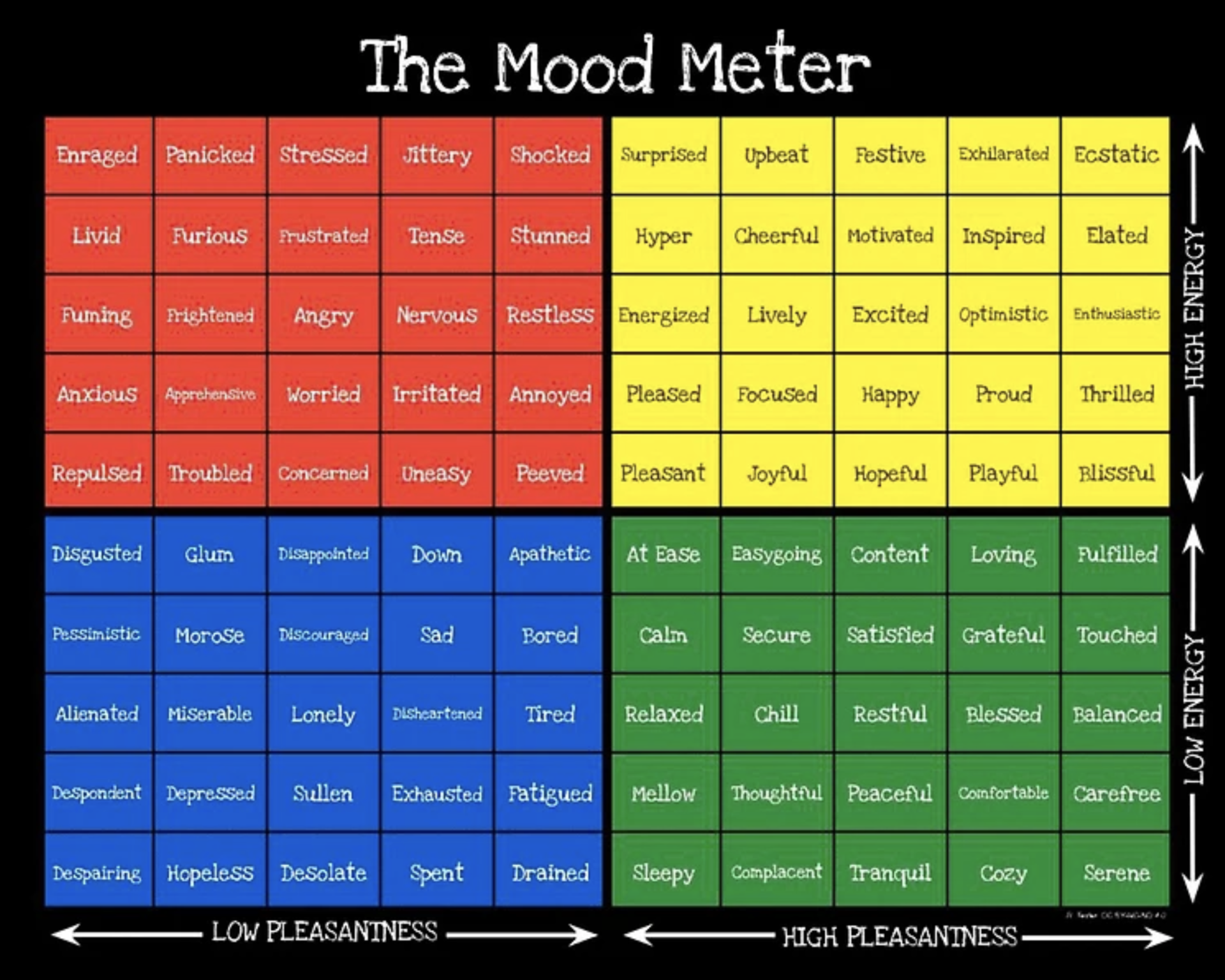
Label – name the emotion you are feeling, you can use the Mood Meter below, or there are lots of good versions online. The more accurate you can be the easier it will be to regulate the emotion.
Experience – let yourself feel the emotion in a safe way. Accept that it is OK to be feeling this way. Know that it will pass.
Regulate – find safe ways to let the emotions out. Try breathing techniques if you are nervous. Get some fresh air and exercise if you are stressed. Do some intense physical activity if you are angry. Chat to a friend or family member if you are sad. These are just some examples. Think about what would work for you.
It is OK to have emotions, they are part of what makes us human. They help us to make sense of what is happening to us. If we understand them and respond well to them then they help to keep us safe and healthy, able to live our best lives!
Mark encourages young people to regularly think about what they are feeling. Use the Mood Meter and follow the RULER approach. The benefits are huge:
- Improved attention and memory
- Better decision-making ability
- Stronger relationships
- Healthier mind and body.
If you are struggling with managing emotions then find a trusted person that you can open-up to. Ask them to help you work through this process. This can be someone at home, at school or at a club or activity you attend. If your school has Connect Mentoring you can ask to be referred and one of our Mentors will be there to help you.